SeidrAwakening

Two stars. Nine broken worlds. One song, silent for ten thousand years.

Lead bronze-masked priest-engineers, wandering caravans and a drowned choir in a real-time strategy game built on Norse seidr and ancient-future space. It runs in your browser (mouse and keyboard, touch or gamepad) and offline on an R36S handheld. VR is planned, not built.

Early prototypeSkirmish is playable with the Hesh, Oru and Thalm peoples.

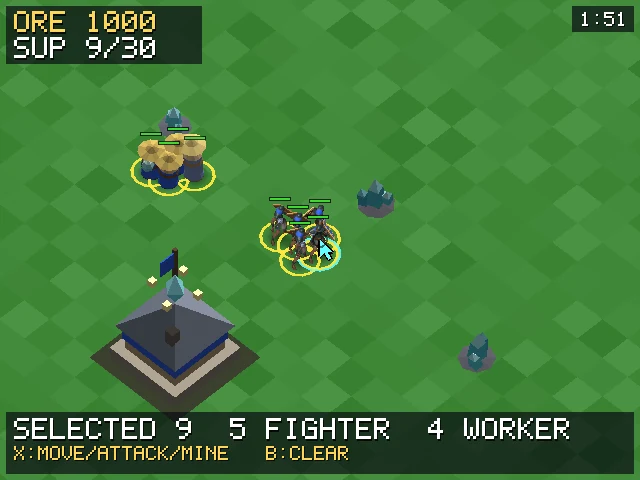
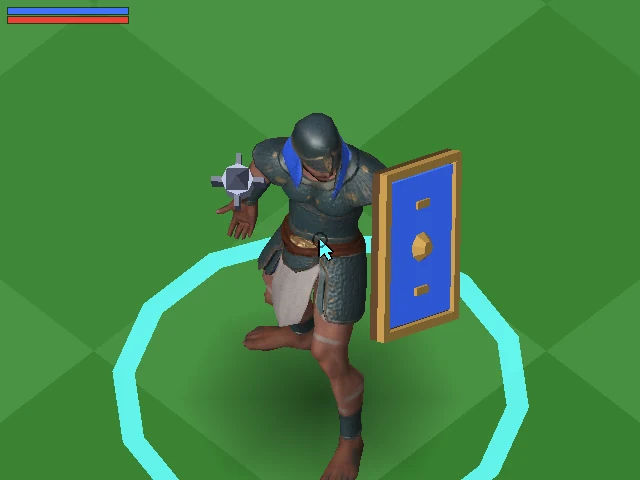
Real frames from the current build: a Shieldwall Acolyte in the engine
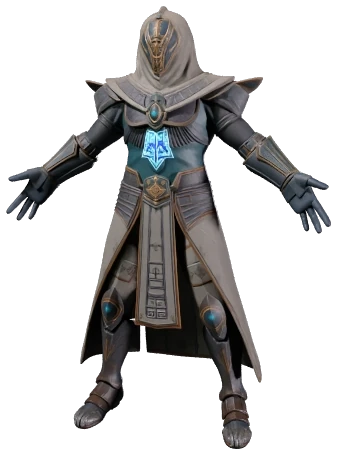
High Artificer Nesh-Amun, the Hesh hero: a tall figure in a hooded bronze exo-frame with a glowing lapis glyph on his chest.

A song that woke up

Ten thousand years ago a people called the Choir wove everything they knew into nine shattered worlds, then fell silent. Now the first Echo has sung back.

Three peoples hear the same song and take it for three different gods. The Hesh hear what was, the Oru what is becoming, the Thalm what is owed. Each is sure the song belongs to them. A seeress, the VΓΆlva, speaks at the edge of every mission, and she knows more than she says.

Seidr Awakening is a real-time strategy game in the lineage you know: gather, build, tech through Ages, fight. What is new is the world around it, the three very different ways to play it, and where you can play it.

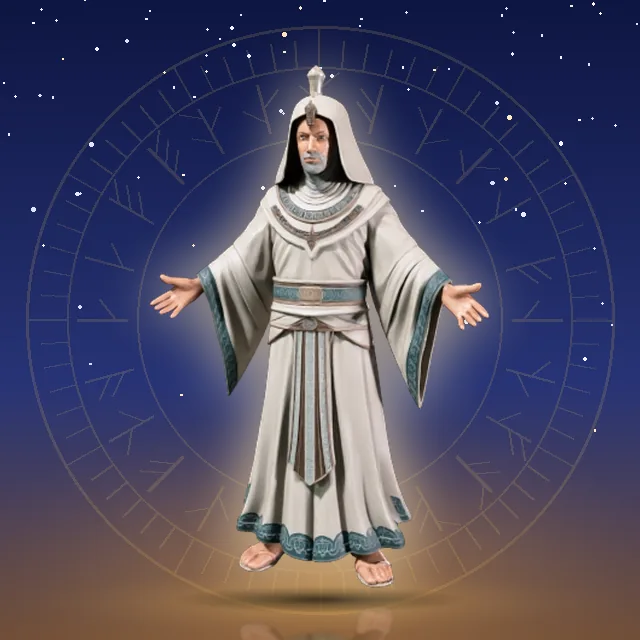
Seer of the Weights, a robed Hesh priest with a pointed hood and teal-trimmed sleeves, standing under a starfield.
Seer of the Weights. Hesh priests keep the balance of the Record.
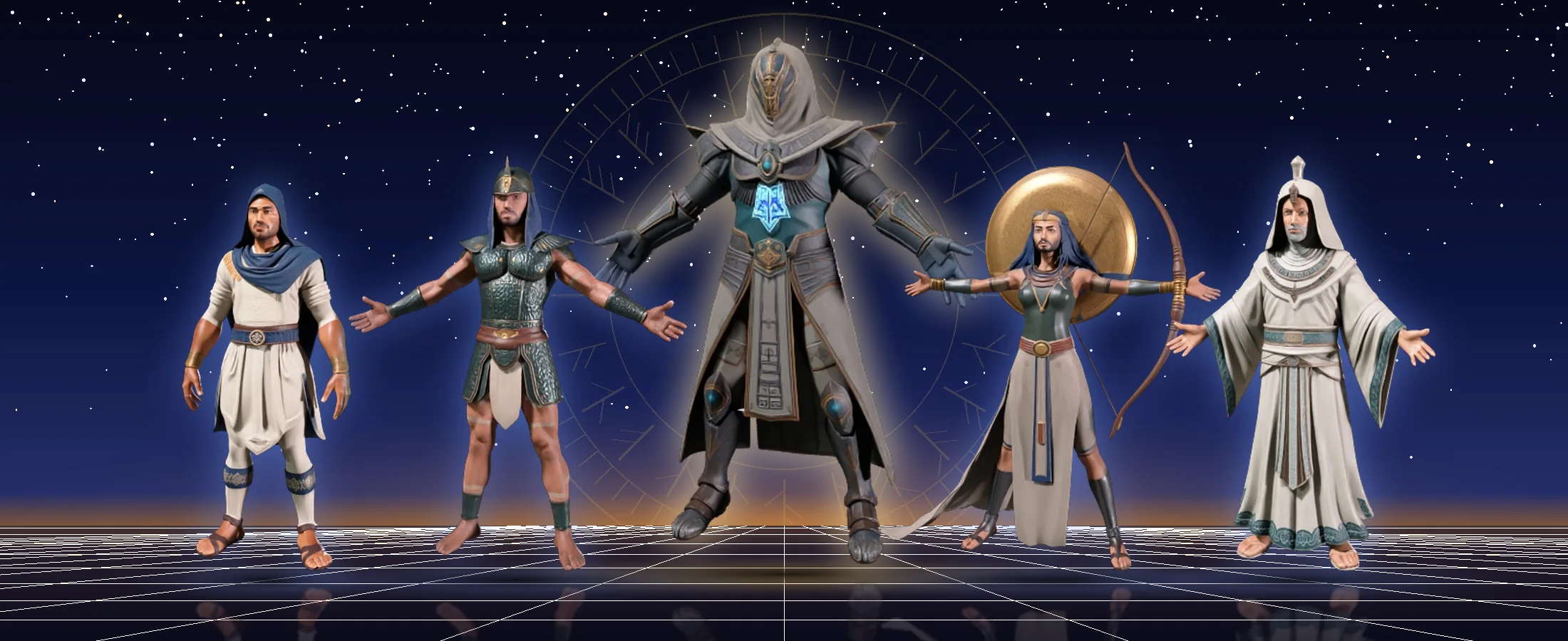
Five Hesh Dominion characters in a line on a starlit plain: a mason, a shield-bearing Acolyte, the hero Nesh-Amun in the centre, a Sunspear Caster with a sun-disc and bow, and a robed Seer.
Glyph MasonWorker. Mines, builds, attunes Echo Sites.
Shieldwall AcolyteLine infantry. Holds the front.
High Artificer Nesh-AmunHero. Bronze piston exo-frame.
Sunspear CasterRanged. Light, not fire.
Seer of the WeightsCaster. Moves health where it is needed.

Concept renders from the Meshy modelling pipeline. Final in-game art is retopologised and may differ.

Ways to play

What runs today: skirmish against the AI (four maps, seed codes, four difficulty levels) with the Hesh Dominion, the Oru Wanderers and the Thalm Deep, in the browser and on the R36S. Not built yet: campaign missions 5 to 12, online play and the ranked ladder (there is no online server running), and VR (design only). The list below is the plan, not the current build.

  • Campaign

    Twelve missions in three acts, one told by each people. Three difficulties, a bonus objective and three stars per mission.

    BrowserPhoneVRR36S handheld
  • Skirmish

    One to four players against the AI on Easy, Normal or Hard. Every people is unlocked from the start.

    BrowserPhoneVRR36S handheld
  • Seed-code maps

    A short code makes a whole map. Type the same code on a phone, a PC or the handheld and you get the same battlefield.

    BrowserPhoneVRR36S handheld
  • Ranked ladder

    One-versus-one, an eight-map pool, three-month seasons and a public commitment score.

    BrowserPhoneVRR36S handheld (not available)
  • Replays and Seed of the Week

    Watch any match at the exact version it was played. Race a shared seed against the Hard AI and compare times.

    BrowserPhoneVR

Same code, same map

Type a seed code, or roll one. The picture is an illustration of the idea; the real generator is not on this page yet.

What is under the sand

Characters worth looking at

Every Hesh character and building starts as a high-detail model made with Meshy, then is retopologised, rigged and baked for the engine: a few hundred triangles on the handheld, thousands on PC. One art set, two budgets, identical game.

Rules we hold ourselves to: every unit reads at 35 pixels tall on a 3.5 inch screen, and every model has team-colour areas painted in.
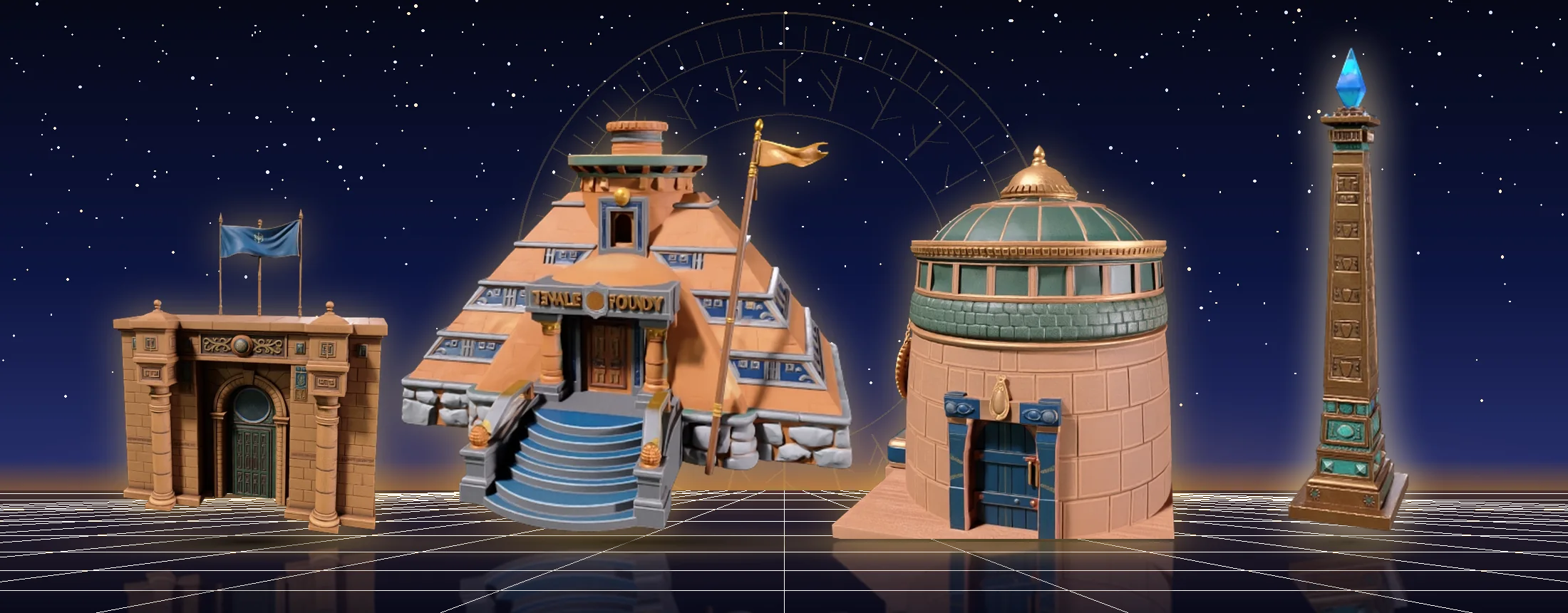
Four Hesh buildings: Glyph Barracks, the stepped Temple Foundry, the domed Sun Granary and an Obelisk Tower with a blue crystal tip.
Glyph Barracks, Temple Foundry, Sun Granary, Obelisk Tower.

The same game on every screen

The rules run on whole numbers at ten ticks a second, with no floating point anywhere in the simulation. Online matches will use deterministic lockstep: players send only their commands, and every device calculates the same battle.

We test it by fingerprinting the game state. The same AI-versus-AI match gives the same fingerprint on a desktop CPU, an ARM CPU, and inside a web browser.

State hash at tick 600, AI vs AI scenario (2026-11-05 check).
PlatformFingerprint
x86-64 native92fd9eb63b1b1d90
ARM64 (R36S build)92fd9eb63b1b1d90
WebAssembly in Chrome92fd9eb63b1b1d90

A handheld edition, offline

The R36S is a 3.5 inch handheld with two sticks, a D-pad and a shoulder pair. Seidr Awakening runs there natively, in 3D, with no network at all. Seed codes, saves and replays still move between your handheld and your browser.

How to install it
130 units on screen
58.5 fpsabout 62,000 triangles, 135 draw calls
400 units on screen
58.4 fpsabout 185,000 triangles, 405 draw calls
Memory in use
about 20 MBreal resident size on the device
Temperature
65-68 °Csustained, CPU at 1.5 GHz

Measured on a real R36S. Frame rate is capped by the 60 Hz screen, so the true headroom is still unmeasured.

A visible commitment score

Nothing ruins a ranked game like an opponent who quits at minute three. So every online player carries a public badge.

The score looks at your last 50 matchmade games: did you finish them? Leaving early, dropping without coming back, or going idle costs points. Finishing gives them back as old games age out. Steadfast and Reliable players are matched together first.

  • Nobody can lower someone else’s score. Reports never change it.
  • Conceding a hopeless rush is free. A real disconnect that comes back is forgiven.
  • The exact formula is public, and so is the badge line: “Finishes 47 of their last 50 games”.
Read the full rules

Try it: how many of your last 50 games did you leave early?

Steadfast Finishes 50 of their last 50 games

Sample illustration using early quits only. Other events weigh differently, see the full rules.

Straight from the engine

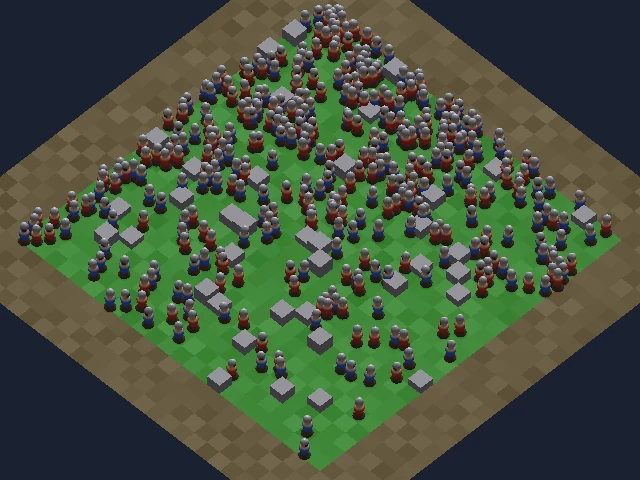
Unretouched captures of the playable prototype. The art is partly placeholder, and we would rather show you that than hide it.

A diamond-shaped arena on a dark blue background packed with several hundred small blue and red units.
400 units in one fight, in the browser build.
A squad of armoured Hesh fighters beside a group of yellow-hatted Masons next to a base.
Masons and fighters leaving the base, at the default game zoom.
Close-up of a Hesh Acolyte with a blue and gold tower shield, inside a cyan selection ring.
Close-up of a baked Acolyte model with its team-colour mask.

Where it is going

Depth before breadth: one people made into a very good game first, then the rest.

  1. NowPlayable prototype in browser and on the R36S. Same simulation everywhere.
  2. Hesh AlphaHesh versus Hesh, menus to result, three AI levels, seed-code maps.
  3. Three peoplesOru and Thalm join, then voice, music and the campaign.
  4. Console v0.9Packaged for handhelds through PortMaster.
  5. Online and rankedAccounts, lockstep matches, the ladder, then phone and VR.

See the full roadmap

Hear the first Echo

The prototype takes about a minute to learn. Build a base, mine ore, train fighters and break the red AI.